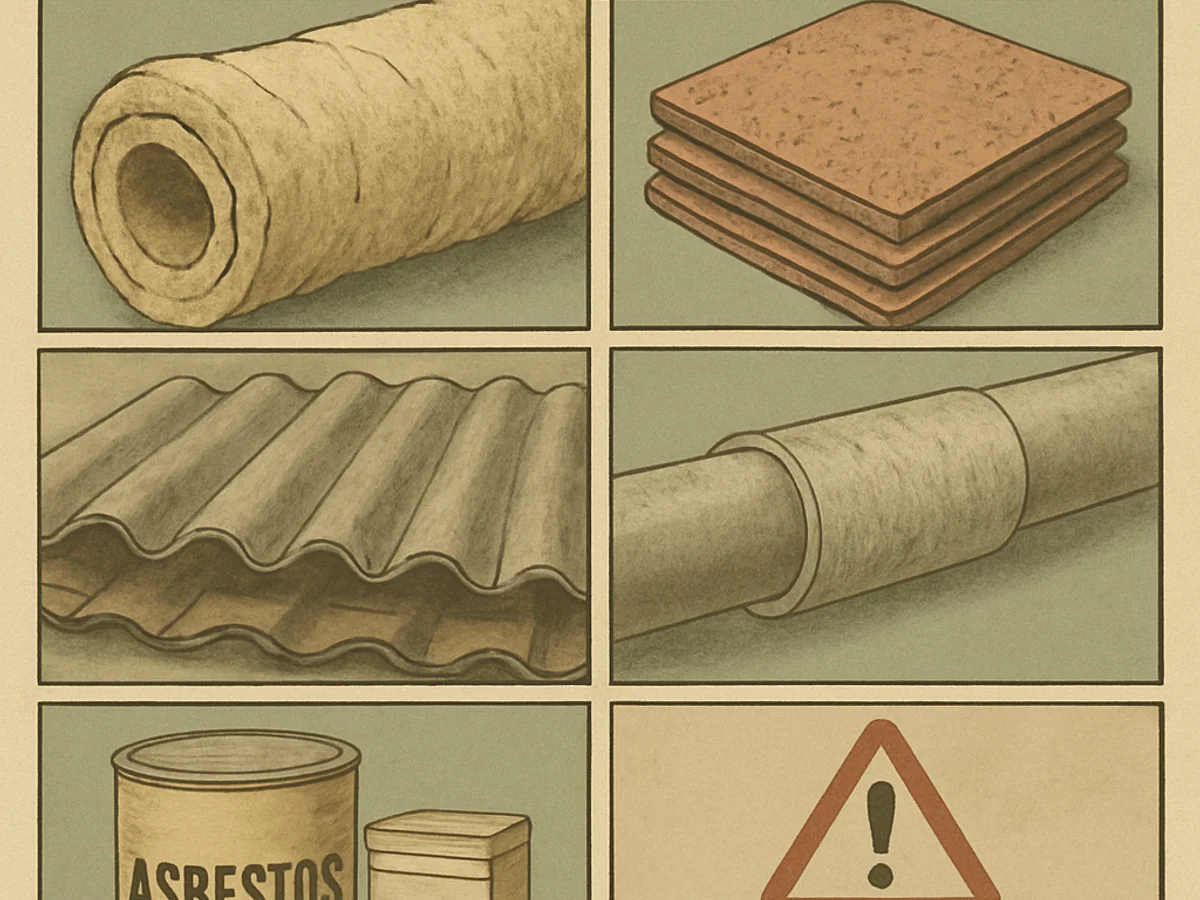
When to Test for Asbestos
Asbestos testing is recommended or required in several situations:
Homeowners Should Test Before:
- Renovations or remodeling – Any project that disturbs building materials
- Demolition – Tearing down walls, ceilings, or floors
- Buying an older home – Homes built before 1980 are more likely to contain asbestos
- After natural disasters – Floods, fires, or storms that damaged building materials
- Installing new HVAC systems – May require cutting through walls or ceilings
Workplace Testing Requirements:
- OSHA compliance – Regular testing in certain industries
- Before renovation projects – Commercial buildings must survey for asbestos
- Employee exposure concerns – When workers report potential exposure
- Building surveys – Required for commercial properties in many jurisdictions
Important: If you suspect a material contains asbestos, do not disturb it. Asbestos is most dangerous when fibers become airborne. Contact a professional for testing.
Types of Asbestos Testing
Several testing methods exist, each suited for different situations:
1. Bulk Sample Analysis (PLM Method)
The most common type of asbestos testing:
- Physical sample collected from suspect material
- Analyzed using Polarized Light Microscopy (PLM)
- Identifies asbestos type and concentration
- Results typically in 3-5 business days
- Cost: $25-75 per sample
2. Air Sampling
Measures airborne asbestos fibers:
- Phase Contrast Microscopy (PCM) – Measures fiber concentration
- Transmission Electron Microscopy (TEM) – More precise identification
- Required during abatement projects
- Used for clearance testing after removal
- Cost: $300-800 per sample
3. Dust Sampling
Analyzes settled dust for asbestos fibers:
- Useful when air sampling isn't practical
- Can identify past asbestos disturbances
- Often used in investigations
- Cost: $150-400 per sample
4. Soil and Water Testing
For environmental contamination:
- Testing soil around demolished buildings
- Water supply contamination concerns
- Industrial site assessments
- Cost: $100-300 per sample
Materials Commonly Containing Asbestos
Before 1980, asbestos was used in thousands of building products. Common materials include insulation in asbestos insulation, particularly in attics and older homes. Asbestos can also be found in vermiculite attic insulation and many other building components:
| Material | Common Uses | Risk Level |
|---|---|---|
| Insulation | Attics, walls, pipes | High |
| Floor Tiles | 9" x 9" vinyl tiles | Medium |
| Popcorn Ceilings | Textured ceiling finish | High |
| Roofing Materials | Shingles, felt, tar | Medium |
| Siding | Cement board, shingles | Medium |
| Joint Compound | Drywall finishing | High |
| Plaster | Wall construction | Medium |
💡 Tip: Homes built between 1930 and 1980 are most likely to contain asbestos materials. For more information on asbestos in older buildings, consult with a certified inspector. Asbestos wasn't fully banned in the US until much later, and some products still contain asbestos today.
The Asbestos Testing Process
Understanding what happens during professional testing helps ensure accurate results:
Step 1: Visual Inspection
A certified inspector will:
- Walk through the property to identify suspect materials
- Document the location and condition of materials
- Determine which samples to collect
- Assess accessibility and safety considerations
Step 2: Sample Collection
Professional sample collection includes:
- Wetting the material to suppress dust
- Using specialized tools to collect samples
- Sealing samples in appropriate containers
- Labeling with location and date information
- Chain of custody documentation
Step 3: Laboratory Analysis
Samples are sent to an accredited laboratory where:
- Trained analysts examine samples under microscopy
- Asbestos fibers are identified by type (chrysotile, amosite, crocidolite, etc.)
- Percentage of asbestos content is determined
- Results are documented in a formal report
Step 4: Report Delivery
You'll receive a comprehensive report including:
- List of materials tested
- Asbestos content for each sample
- Type of asbestos identified
- Recommendations for management or removal
Asbestos Testing Costs
Testing costs vary based on scope and type of testing needed:
| Service | Typical Cost Range | Notes |
|---|---|---|
| Home Inspection | $400 – $800 | Includes visual inspection + 3-5 samples |
| Additional Samples | $25 – $75 each | Bulk material analysis |
| Air Sampling | $300 – $800 | Per sample location |
| Commercial Survey | $1,000 – $3,000+ | Depends on building size |
| Rush Analysis | +50% – 100% | 24-48 hour turnaround |
Factors affecting cost:
- Size of the property
- Number of suspect materials
- Accessibility of sampling locations
- Geographic location
- Urgency of results
Finding a Certified Asbestos Inspector
Proper certification ensures accurate, legally defensible results:
Certifications to Look For
- EPA/AHERA Certification – Required for schools and public buildings
- NACHI (InterNACHI) – Home inspector certification with asbestos training
- State-specific licenses – Many states require additional licensing
- NVLAP Accreditation – For laboratories analyzing samples
Where to Find Inspectors
- State health departments – Maintain lists of licensed inspectors
- EPA website – Resources for finding accredited professionals
- Home inspector associations – Members with specialized training
- Environmental consulting firms – Full-service testing and remediation
Questions to Ask
- Are you licensed/certified in my state?
- What certifications do you hold?
- What laboratory do you use? Is it accredited?
- What is included in your inspection fee?
- How long will results take?
- Do you also perform abatement? (Be cautious of conflicts of interest)
DIY Testing vs. Professional Testing
While DIY test kits exist, they have significant limitations:
| Factor | DIY Test Kits | Professional Testing |
|---|---|---|
| Cost | $30 – $100 | $400 – $800+ |
| Safety | Risk of exposure | Proper safety protocols |
| Accuracy | Variable | Accredited lab analysis |
| Legal Standing | May not be accepted | Defensible in court |
| Expertise | Limited | Knows where and how to sample |
Warning: DIY kits may be suitable for initial screening of single materials, but professional testing is strongly recommended before any renovation work and is typically required for legal compliance.
Understanding Test Results
Your test report will include several key pieces of information:
Asbestos Types
- Chrysotile (white asbestos) – Most common type, found in 95% of asbestos-containing materials
- Amosite (brown asbestos) – Common in insulation and cement products
- Crocidolite (blue asbestos) – Considered most dangerous, used in high-temperature applications
- Tremolite, Anthophyllite, Actinolite – Less common, often contaminants in other minerals
Concentration Levels
Results typically show asbestos as a percentage of the total material:
- Trace amounts – Less than 1%
- Low – 1-10%
- Medium – 10-50%
- High – Greater than 50%
Interpreting Air Sample Results
Air samples are measured in fibers per cubic centimeter (f/cc):
- Below 0.01 f/cc – Generally considered acceptable clearance level
- 0.01-0.1 f/cc – Elevated, may require action
- Above 0.1 f/cc – Significant contamination requiring immediate remediation
What to Do If Asbestos Is Found
Finding asbestos doesn't necessarily mean you need immediate removal. Options include:
Option 1: Leave It Alone (Management in Place)
If asbestos-containing material is:
- In good condition
- Not likely to be disturbed
- Not in a high-traffic area
The safest option may be to leave it undisturbed and monitor its condition periodically.
Option 2: Encapsulation
Sealing the material to prevent fiber release:
- Applying sealants to surfaces
- Covering with protective barriers
- Less expensive than removal
- Requires ongoing monitoring
Option 3: Removal (Abatement)
Complete removal is necessary when:
- Material is damaged or deteriorating
- Renovation will disturb the material
- Encapsulation isn't practical
Must be performed by licensed abatement contractors.
Never Attempt DIY Asbestos Removal
Asbestos removal is dangerous and often illegal without proper licensing. Always hire certified abatement professionals.
Find Certified Abatement ContractorsFrequently Asked Questions
Medical Disclaimer: The information provided is for educational purposes only and is not intended as a substitute for professional advice. Always consult certified asbestos professionals for testing and removal. Improper handling of asbestos can cause serious health risks.